CREDITS
Director |
|
Claude Chabrol |
| Producer |
|
Raymond Hakin, Robert Hakim |
| Screenplay |
|
Claude Chabrol, Paul Gegauff |
Director of Photography
|
|
Henri Decae |
| Editor |
|
Gisele Chezeau, Jacques Gaillard, Claude Le Moro |
| Composer |
|
Pierre Jansen, Paul Misraki |
MAIN CAST
| Jane |
|
Bernadette Lafont |
| Jacqueline |
|
Clotilde Joano |
| Ginette |
|
Stephane Audran |
| Rita |
|
Lucile Saint-Simon |
| Le Patron du Magasin |
|
Pierre Bertin |
Marcel |
|
Jean-Louis Maury |
Albert |
|
Albert Dinan |
|
| English Title |
The Good Girls |
|
|
| Director |
Claude Chabrol |
| Year / Length |
1960 || 100 mins |
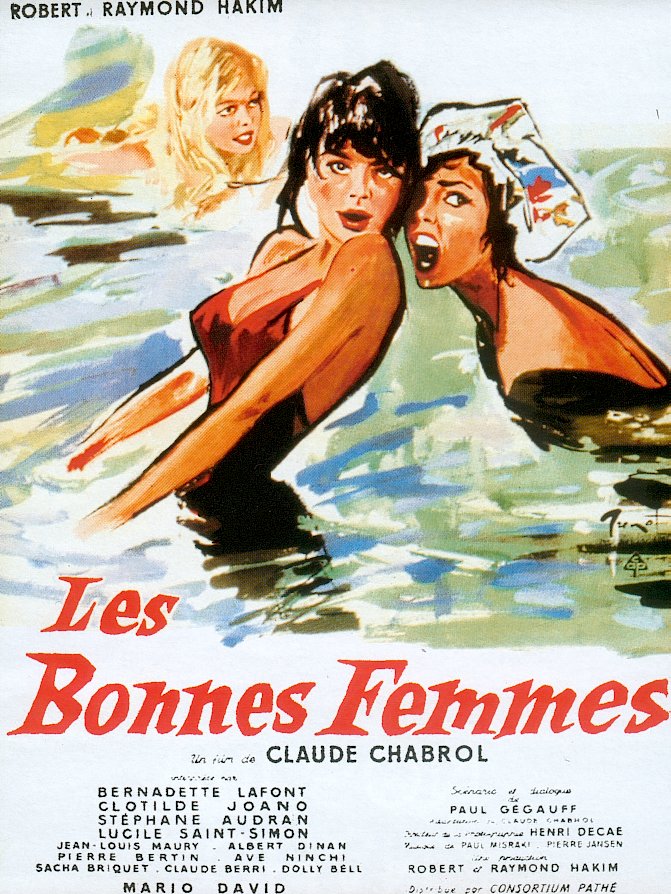
Four attractive young women who work together in an appliance store in Paris spend their free time looking for love and fulfilment with little success. High-spirited Jane (Bernadette Lafont) is picked up by a couple of lechers who are only interested in one thing. Ginette (Stephane Audran) hopes to become a great singer but is forced to perform in a seedy music hall. Rita (Lucille Saint-Simon) is engaged to a man who appears more concerned with pleasing his parents than caring about her. Only the reserved Jacqueline (Clotilde Joano) seems to have found true romance. But is the mysterious figure on a motorcycle really the man of her dreams?
see also articles on:
Top 10 Chabrol Movies || Claude Chabrol Profile|| French New Wave History || French New Wave Film Guide |
|
coming soon!
|
|

 .
. .
.

 .
. .
.