ALEXANDRE ASTRUC BOOKSHELF |
 
le plaisir en toutes choses
(interviews with Noel Simsolo)
"The Pleasure in Everything":
a wonderfil collection of interviews (in French) with Alexandre Astruc spanning many years and covering Astruc's personal history, as well as his work and style.
Explore this book:
|
| Alexandre Astruc (July 13th 1923 – May 19th 2016 ) is best known today as an influential film theorist whose essay ‘Birth of a new avant-garde: la camera-stylo’, written in 1948 for L’Ecran, advocated a more personal cinema and a new film language. Critic David Thomson has described the article as, ‘the most important critical theory the cinema has yet produced’. As a director he put his theories into practice with such films as Le Rideau cramoisi (The Crimson Curtain, 1953) and Une Vie (One Life, 1958), but his later work was largely overshadowed by the arrival of the bolder, more contemporary movies of the New Wave, and his reputation as a director decreased after 1959. |
|
|
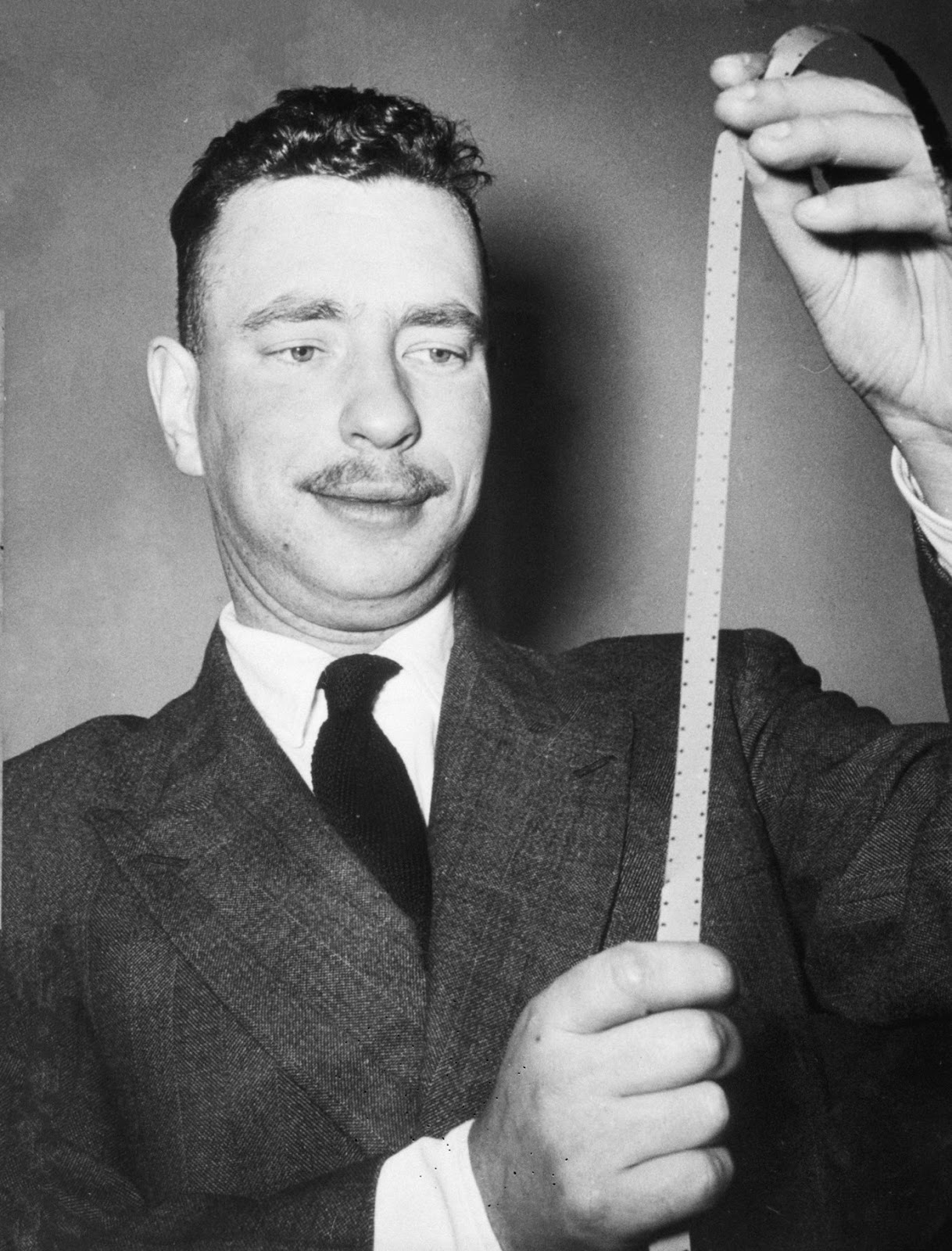
Dir. Alexandre Astruc
|
|
Born in Paris to parents who were both journalists, Astruc fell in with the city’s intellectual and literary crowd during the Occupation, establishing himself after the war as a writer and critic. Specialising in film criticism, he worked for such magazines as Combat, La Gazette du Cinéma, L’Ecran francais, Ciné-Digest, and later Cahiers du Cinéma. Astruc's writings were instrumental in the creative renewal of French cinema. In particular his famous essay ‘Birth of a new avant-garde: la camera-stylo’, published in L'Ecran Français in March 1948. In the article he defined film as a language like literature: a form through which the artist expresses his subtlest thoughts or obsessions as in an essay or novel. The text became one of the theoretical underpinnings of the Nouvelle Vague and has continued to influence many filmmakers either directly, or indirectly, ever since.
As a leading film critic Astruc, with André Bazin and others, co-founded one of the most important film clubs: Objectif 49. Here such directors as Roberto Rossellini, Orson Welles and Preston Sturges came to present their work and members included Robert Bresson, Jean Cocteau, writer Raymond Queneau and a teenage Francois Truffaut. The club would eventually merge with Eric Rohmer’s Ciné-club du Quartier Latin to create the magazine Cahiers du cinema.
Astruc's career in the film industry began in 1947 as an assistant director to
Marc Allegret on the film Blanche Fury and as co-writer of Marcel Achard’s Jean de la Lune (1948) and Marcello Pagliero’s The Respectful Prostitute (1952), based on the play by Jean-Paul Sartre. Because of Astruc’s reputation as a critic, expectations were high when he began to make his own films. His first couple of shorts, however, were undistinguished, and it wasn’t until Le Rideau cramoisi (The Crimson Curtain, 1953) that he made an impact. Based on a nineteenth century mystery story by Barbey d’Aurevilly about a secret love affair, the 44 minute mini-feature received good reviews and won the Prix Louis Delluc that year. Told completely in voice-over without dialogue – evoking a mood somewhere between dream and memory – it established Astruc as a new director with an assured creative vision.
Astruc’s first full-length feature Les Mauvaises rencontres (Bad Liasons, 1955) failed to replicate the originality of Le Rideau cramoisi, but three years later Une vie (End of Desire, 1958), adaptated from Guy de Maupassant’s 19th century novel about an unhappy marriage between an idealistic woman of aristocratic background and a cynical man, was an artistic triumph. Exquisitely photographed by Claude Renoir in the colours of an impressionist painting, and graced by a remarkably performance by Maria Schell, it should have been a popular success, but the film’s slow pace and classical style now seemed old-fashioned next to the films then emerging by younger directors like Louis Malle, Claude Chabrol and Francois Truffaut.
Leaving 19th century literary adaptations aside momentarily, Astruc responded with his own contribution to the Nouvelle Vague. La Proie pour l’ombre (Shadows of Adultery, 1961) told the story of a woman (Annie Girardot) who turns her back on her bourgeois background to open an art gallery and have an affair. Set against a backdrop of cocktail parties, modern apartments and a soundtrack of jazz and Bach, it had all the elements then in vogue and was a moderate success, but could not compete with the audacious experiments of directors such as Alain Resnais and Jean-Luc Godard then garnering all the critical attention.
Subsequently Astruc returned to the 19th century, with adaptations of Gustave Flaubert’s L’Education Sentimentale (Lessons in Love, 1962), and Edgar Allan Poe’s The Pit and the Pendulum (1964). These were followed by two films set during the Second World War: La Longue marche (1966) and Adriactic Sea of Fire (1968).
From the late 1960s onwards, Astruc worked mostly in television, alternating between literary adaptations and documentaries. In 1994, he became the first-ever recipient of the Académie Française’s René Clair Award for achievement in cinema.
Alongside his career in cinema, Astruc published a number of books. His first novel, Les Vacances, came out 1945, and he returned to literature in the mid-’70s, publishing works of fiction, collections of essays, and memoirs. In 2015, the actor and critic Noël Simsolo published a book-length interview with Astruc entitled The Pleasure In All Things.
French Title |
English Title |
Year |
Category |
Notes |
| Le rideau cramoisi |
The Crimson Curtain |
1953 |
short |
|
| Les mauvaises rencontres |
Bad Liaisons |
1955 |
feature |
|
| Une vie |
One Life |
1958 |
feature |
|
| La proie pour l'ombre |
Prey for the Shadows |
1961 |
feature |
|
| L'éducation sentimentale |
Sentimental Education |
1962 |
feature |
|
| Le puits et le pendule |
The Pit and the Pendulum |
|
|
|
| Evariste Galois |
|
1965 |
short |
for television |
| Le longue marche |
Long March |
1966 |
feature |
|
| Flammes sur l'Adriatique |
Flames Over the Adriatic |
1968 |
feature |
|
| "Cinéastes de notre temps" - Murnau episode |
|
1970 |
documentary |
for television |
| Sartre par lui-méme |
Sartre by Himself |
1976 |
documentary |
for television |
| Louis XI ou la naissance d'un roi |
|
1978 |
TV drama |
for television |
| Louis XI ou le pouvoir central |
|
1979 |
TV drama |
for television |
| Arséne Lupin joue et perd |
|
1980 |
TV drama |
for television |
| Histoires extraordinaires: La chute de la maison Usher |
The Fall of the House of Usher |
1981 |
TV drama |
for television |
| Une fille d'éve |
|
1989 |
TV drama |
|
| Albert Savarus |
|
1993 |
TV drama |
|
|

 .
. .
.

 .
. .
.


